
Making automated mobility part of public transport
From rural connections to metro feeders, automated vehicles could fill gaps in public transport. The Horizon Europe CCAM project ULTIMO is exploring what it takes to turn that possibility into a service that connects with trains and buses, responds when someone requests a journey, and provides information and support to passengers. Behind the scenes, booking platforms, fleet operators, and vehicles must exchange information reliably, while operators need to be able to manage vehicles from different manufacturers as part of one fleet.
The project aims to lay the foundations for large-scale, economically viable, on-demand and accessible automated public transport centred on user needs. ULTIMO is putting its approach to the test across three European deployment sites, each representing a different public transport challenge:
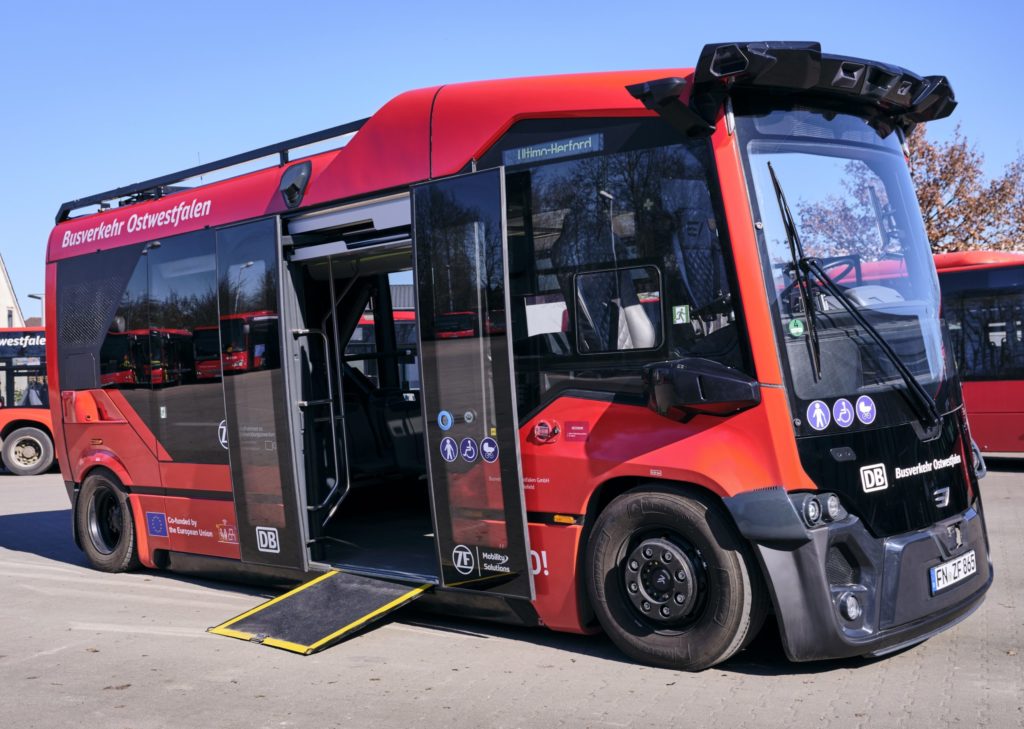
- In Herford, Germany, automated minibuses are intended to strengthen connections between the city and surrounding rural areas, while also exploring how vehicles from different manufacturers can operate within a larger, interoperable fleet.
- In Oslo’s Groruddalen Valley, automated shuttles are envisaged as feeders to the metro, testing how on-demand mobility can become part of everyday public transport operations.
- Around Geneva, the focus is on a flexible service without fixed routes or timetables, using dynamic routing and ride pooling to integrate automated vehicles into the existing transport network.
Interoperability is an important part of that challenge. ULTIMO’s Common Open AV API (KER7) is intended to provide a shared, two-way connection between fleet orchestration systems and automated vehicles of different types and manufacturers. Vehicle-specific adapters can provide a connection where a common protocol cannot yet be used.
Connected automated services must also be secure. ULTIMO’s results include a CAV and 5G Cybersecurity Module (KER10), while research carried out within the project led to TARA 2.0 for Connected and Automated Vehicles.
ULTIMO is exploring an accessibility service that can identify mobility aids, such as wheelchairs and white canes, and alert a remote operator. The project also evaluates digital passenger interfaces with input from people with reduced mobility. This passenger-centred perspective is reflected in 24 narrative use cases translating different passenger needs into requirements for booking, passenger information, fleet coordination, and operational support.
By bringing these elements together, ULTIMO is exploring what cities and public transport operators need to put in place before automated mobility can move beyond individual pilots and become a scalable part of everyday public transport.
Source: The original article was published here.