After-deployment continuous assessment of Automated Driving Systems
“Vehicles are rapidly evolving into software-defined, sensor-rich systems capable of highly automated driving. But once these vehicles are deployed on public roads, who is responsible for monitoring their safety over time – and how?“*
Over their lifetime, modern vehicles’ software and sensors are exposed to wear and tear, over-the-air updates, regulatory changes, shifting usage conditions. Yet, in-use safety assessment of Advanced Driver Assistance Systems (ADAS) and Automated Driving Systems (ADS) remains conceptual, not yet operational, and requires a shift towards continuous, data-driven monitoring and reporting1.
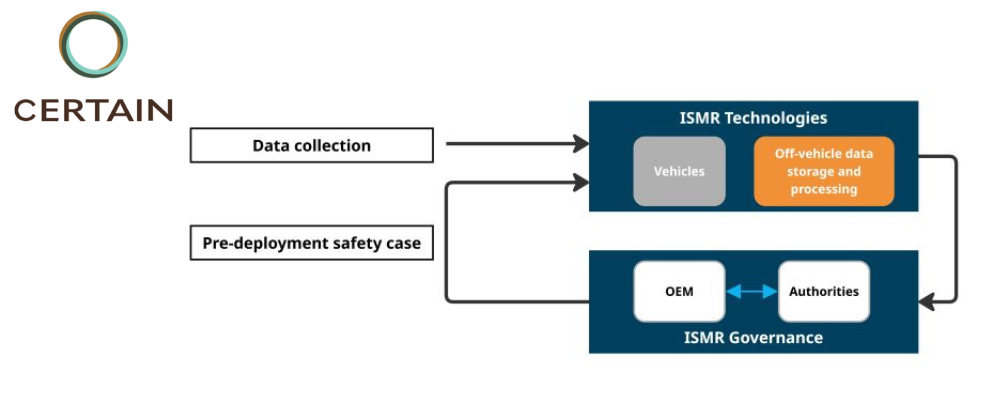
The EC-funded CCAM project CERTAIN is translating this shift into practice: the project’s In-Service Monitoring and Reporting (ISMR) system addresses current limitations of Periodic Technical Inspections (PTI), which are not designed for increasingly complex ADAS and ADS technologies assessment. CERTAIN’s framework outlines a future approach of continuous safety assessment after deployment and throughout the entire lifecycle of CCAM systems, based on real-world operational data.
The ISMR functional requirements and specifications2 are based on collected insights from applicable stakeholder groups, including OEMs and type approval authorities, as well as previous EU-funded projects results (such as HEADSTART, V4SAFETY, SUNRISE, SYNERGIES, and SET Level, ensuring alignment with the current state of the art.
Source: The original article was published here
- This direction is already reflected in emerging regulatory developments, such as UNECE proposals on new assessment methods and global technical regulations for automated driving systems. ↩︎
- A related report, including a governance framework proposal and initial concepts for future PTI integration is currently under preparation. ↩︎