This edition is held in Geneva, Switzerland, and organised in collaboration with UNECE Working Party 1 Global Forum for Road Traffic Safety to strengthen the link with UNECE activities, which are extremely relevant for CCAM at EU level. The programme will namely feature UNECE representatives among keynote speakers and panellists.
Thursday 8 October 2026
The Symposium opening will feature keynote speeches by:
- Andrea de Candido, Policy Officer – CCAM, European Commission – Directorate-General for Research and Innovation
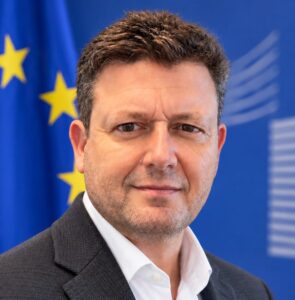
Since 2022, Mr De Candido is leading the work on Connected, Cooperative and Automated Mobility (CCAM) in the frame of the Directorate General for Research & Innovation of the European Commission. In this role he manages the relations with the CCAM Public-Private Partnership the European Commission has set up to support the transition towards automated mobility.
- François Guichard, Secretary of the Working Party on Automated/Autonomous and Connected Vehicles, UNECE

Mr Guichard is the Secretary of the Working Party on Automated/Autonomous and Connected Vehicles. He is supervising the activities on technical regulations related to vehicle automation and vehicle connectivity. He is the Intelligent Transport Systems and Automated Driving focal point of the United Nations Economic Commission for Europe.
- David Favre, Director General of the Geneva Cantonal Office for Transport

Mr Favre has been serving as Director General of the Canton of Geneva’s Transport Office since 2016. In this role, he oversees the delivery of the canton’s mobility strategy, working closely with partners across the Grand Genève region. Before taking up his current post, he served as Deputy Secretary General with responsibility for transport in Geneva’s cantonal administration and headed Transferis, the joint venture between Swiss Federal Railways and SNCF set up to develop what would become the Léman Express.
- Christian Merkt, Director EU Governmental Affairs Digitalization and Automated Driving, BMW Group / Chair, CCAM Partnership
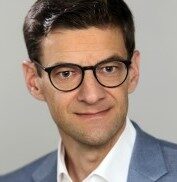
Mr Merkt has been the Director EU Governmental Affairs Digitalization and Automated Driving at BMW and CCAM Association Chair since 2024. After joining BMW in 1999, he has held several positions including Senior Expert Consumer Protection Vehicle Safety Asia with corresponding strategy of vehicle projects.
In June 2026 UNECE WP.29 adopted the first global regulatory framework for fully driverless Automated Driving Systems. This will be the starting point of the discussion in this session that will then continue highlighting how adoption of a framework regulation does not automatically imply deployment. The same framework now has to be implemented in regional law, reconciled with national and sub-national traffic rules, and turned into vehicles that can actually be legally deployed. This panel looks at what that takes.
Moderator
Stephane Dreher, Head of CCAM, ERTICO – ITS Europe
Panellists
- Richard Damm, Chair of UNECE WP.29 World Forum for Harmonization of Vehicle Regulations
- Dr Bruno Viegas, Head of international AV regulation, International Vehicle Standards Team, CCAV (Centre for Connected and Autonomous Vehicles) /UNECE WP.1 Global Forum for Road Traffic Safety
- Dr. Mohamed Brahmi, European Commission – Directorate-General for Internal Market, Industry, Entrepreneurship and SMEs (GROW)
- Christian Merkt, Director EU Governmental Affairs Digitalization and Automated Driving, BMW Group / Chair, CCAM Partnership
- Elsa Lanaud, Head of Autonomous Vehicles Department, DG for Energy & Climate, Ministry of Ecological Transition, Territorial Development, Transport, Housing and Urban Affairs, France
As CCAM moves closer to deployment, cities and regions are increasingly expected to play a central role in shaping and enabling its implementation. This session will bring together cities, European institutions and key initiatives to discuss the conditions needed for meaningful city participation in the next phase of CCAM deployment. Drawing on experiences from ongoing initiatives, as well as emerging insights from readiness assessment and deployment roadmap activities, the discussion will explore both the support public authorities require and the contributions they can make to achieving shared European objectives.
Moderator
Thomas Geier, Secretary-General, Association of Europe’s metropolitan transport authorities (EMTA)
Panellists
- Laura Babío Somoza, Smart Mobility Cluster Lead, Just Transition Co-coordinator, POLIS
- Francoise Guaspare, European Policy Officer, Île-de-France Region
- Luciana Iorio, Senior Legal Officer, Italian Ministry of Infrastructures and Transport / UNECE WP.1 Global Forum for Road Traffic Safety Chairperson
- Gustavo Reyes, Project Manager Urban Innovation, City of Helmond
- Andrea de Candido, Policy Officer – CCAM, European Commission – Directorate-General for Research and Innovation
CCAM deployment requires reliable digital infrastructure, trusted road information and practical integration into transport operations. This session will discuss how digital maps and infrastructure, digital traffic rules and operational experience from automated transport can support safer and more scalable CCAM deployment. It will draw on developments in the Netherlands, Sweden’s work on digital traffic rules, experience from daily autonomous transport operations in Europe and the US, and an ongoing EU CCAM project.
Moderator
Bastiaan Krosse, Research Manager Integrated Vehicle Safety, TNO
Panellists
- Roland van Venrooy, Director Advanced Engineering, TomTom
- Märta Ernfors, Innovation Manager, Trafikverket (Swedish Transport Administration)
- Zeljko Jeftic, Senior Director – Global Market Development, Einride
- Samar Abouraad, Global Safer Journeys Specialist, iRAP
Transfer by shuttle buses to the demonstrations location where the networking reception will take place.
Demonstrations will bring together autonomous vehicles from five providers, showing how self-driving technology serves both people and goods:
- WeRide presents a robovan and parcel-delivery vehicle for logistics, a robobus for passenger transport, and a robo street sweeper for city services.
- AMAG exhibits their ID.buzz automated vehicle for passenger transport
- Navya displays its Arma shuttle, highlighting the in-cabin technology that shapes the passenger experience
- OVO shows how non-automated last mile delivery solutions can complement autonomous mobility.
- MILLA presents a vehicle already carrying people around the CERN site in Geneva
Friday 9 October 2026
The Global CCAM Observatory turns a rapidly evolving and fragmented automated-mobility landscape into a structured global picture. Developed by the European Commission’s Joint Research Centre in collaboration with DG RTD, it connects companies, technologies, suppliers and real-world services to reveal how the CCAM ecosystem is taking shape worldwide and where Europe stands within it. The presentation will introduce the Observatory, highlight its first insights, and show how its data can uncover emerging industry patterns. It will also present the Observatory’s online platform, the related publications and analytical outputs that translate this evidence base into accessible, policy-relevant knowledge for the CCAM community.
Presenter
 Andromachi Mourtzouchou, Consultant, European Commission – Joint Research Centre (JRC)
CCAM research & innovation and cross-border testing of CCAM technologies and services are key priorities of the EU Automotive Action Plan to strengthen European competitiveness and technological sovereignty. This session will reflect on key achievements and lessons learned from the past and ongoing activities of the CCAM Partnership which, since its launch in 2021, has aligned stakeholders across the value chain to deliver impactful R&I results, advancing validation, safety, and inclusiveness. As the Partnership enters its final phase, the focus increasingly turns to bridging innovation and large-scale deployment. The session will also explore the remaining gaps to derive the future priorities that will set the strategic direction for the research activities to be launched under the umbrella of the next Research Programme, Horizon Europe 2028-2034.
Moderator
Marzena Jougounoux, Policy Officer, European Commission – DG RTD
Panellists
- Sergio Fernandes, Head of Office, CCAM Partnership
- Guido Di Pasquale, Managing Director, PAVE Europe / CCAM Partnership Cluster 1 co-Leader
- Sofie Vennersten, Director Public Policy & Regulatory Affairs, Volvo Group – Trucks Technology & Industrial Division / EURIAS Sub-group chair (Road Mobility Ecosystem)
- Michele De Gennaro, Head of the Competence Unit Electric Vehicle Technologies, Austrian Institute of Technology (AIT) / EARPA President
Data and AI are the twin engines driving the next leap in automated mobility, separating research-grade systems from deployment-ready ones. The rise of end-to-end AI architectures and foundation models is reshaping how automated driving systems are designed, validated, and operated. Europe faces a dual challenge: keeping pace with rapid technological developments while building frameworks ensuring trustworthiness, data sovereignty, and competitive fairness. This session addresses the concrete steps needed to turn data and AI assets into safe, scalable, and sovereign European capabilities.
Moderator
Oihana Otaegui, Head of ITS and Engineering, Vicomtech
Panellists
- Francesco Bellotti, Professor, University of Genova
- Carlos Lujan, Head of Homologation, Connected & Automated Vehicles, Applus+ IDIADA
- Daniel Quirke, Global Automated Vehicle Policy Lead, Wayve
Takeaways from EUCAD 2026 Symposium
Hamid Zarghampour, Chief Strategist, Swedish Transport Administration / Vice Chairman, CCAM Partnership
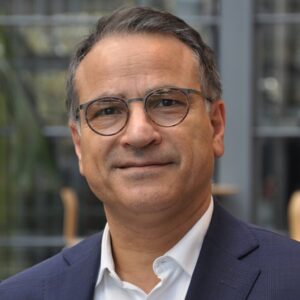 Mr Zarghampour has worked extensively with transport system digitalisation, connected and automated mobility and the role of public authorities in supporting the transition from research and demonstration towards implementation. His work has had a particular focus on safe and sustainable mobility solutions, and on how CCAM can contribute where it provides clear value to the transport system.